Our Location
5th Floor, Huake Center, Lanshan District, Linyi City, Shandong Province, China

5th Floor, Huake Center, Lanshan District, Linyi City, Shandong Province, China
Typing how plywood make into a search bar usually means you want the full sequence, from debarked log to stacked sheet. The answer explains why a panel stays flat while solid boards warp, and it tells a buyer which process details to check before ordering a container.
Each step leaves a fingerprint on the finished sheet: moisture control affects flatness, glue spread affects bond, pressing time affects thickness. The paragraphs below connect those fingerprints to the checks buyers can run with nothing more than a caliper and a datasheet.
You will walk through every stage of manufacturing, then connect each step to the quality checks that matter at the receiving dock.
Disciplined mills hold production when a parameter drifts. The press opens late, the dryer holds a sheet, or the grader pulls a bundle off the line because the face misses the target. That pause costs minutes and prevents the rejected lot that costs a week.
The factory starts with a debarked log fixed on a rotary lathe. The lathe spins the log while a long blade peels a continuous thin veneer, much like unwinding a roll of paper off a giant spool.
Before peeling, the mill steams or soaks the log to soften the fibers. A soft, uniformly heated log cuts smoothly, while a dry or uneven log tears the surface and drops the potential face grade of every sheet that follows.
A dull lathe blade tears the veneer and drops the face grade, while a maintained line peels sheets clean. Ask how often the blades change, because the answer shows in the smoothness of the delivered face.
Veneer follows the log diameter, so wider logs yield wider sheets. Mills splice narrow sheets or accept trim waste depending on the panel size, and the choice shows up in the lay-up pattern you see inside the finished core.
Rotary peeling holds the veneer thickness within tight limits because the blade position controls the layer. Faster cuts raise output but roughen the surface, so disciplined lines run at speeds that protect both yield and face.
Fresh veneer carries too much moisture to glue, so it passes through dryers that pull the sheet to a target moisture content. The dried sheet shrinks slightly and tightens, ready for adhesive.
Graders sort the dried veneer and assign each sheet to a face class. Clean sheets move toward the premium faces, while sheets with knots and cracks drop to utility grades that stay covered in service.
High-face panels receive patches that remove knots and replace them with clean wood. The patch labor raises the price, yet it turns a lower-quality sheet into a smooth surface worth finishing.
Assembly happens in a lay-up line where workers stack veneers with adhesive spread between every layer. Each pair of layers runs its grain in the opposite direction, which creates the cross-banded structure that makes plywood stiff.
The stacked bundle enters a hot press that cures the glue under heat and pressure. Even pressure flattens the panel, sets the bond, and locks the thickness, so the press cycle effectively decides flatness across the entire run.
Efficient lines feed trim waste and dust back into the energy system or the core stock. Ask how the mill handles byproducts, because the answer shows how disciplined the operation is with material that a sloppy line simply throws away.
The adhesive layer is thin, so a small variation changes the bond and the weight. Workers measure the spread on every line, and a mill that documents the target number protects against starved joints that delaminate in service.
After pressing, the panel cools before trimming. Rushing the cooling stage lets internal stress creep into the sheet, which later appears as cupping in the warehouse, so controlled lines protect this step too.
Cooled panels move to trimming, where the line cuts them to standard dimensions and squares the edges. Sanding follows on grades that need a smooth face, removing the pattern imprint left by the press.
The final stamp ties every sheet to its batch, which becomes the reference the buyer verifies against the certificate at arrival.
Edge cleanup after trimming removes splinters that catch the router and the bander. A clean edge saves fabrication time downstream and prevents the small chips that ruin a painted face at installation.
Bundles stacked face-to-face with protected ends reach the site flatter than loose stacks. Confirm the packing detail on the order, because the protection costs little and prevents the corner damage that spoils a premium face.
Measure delivered sheets at the corners and mid-span, then compare across the bundle. A tight spread of readings reflects a stable press and a controlled drying stage, while a wide spread points at drift between runs inside the same batch.
Match the delivered stamp to the datasheet before unloading the full container. The stamp check takes a minute, catches a mixed batch early, and keeps the claim process short if the sheet does not match the order.
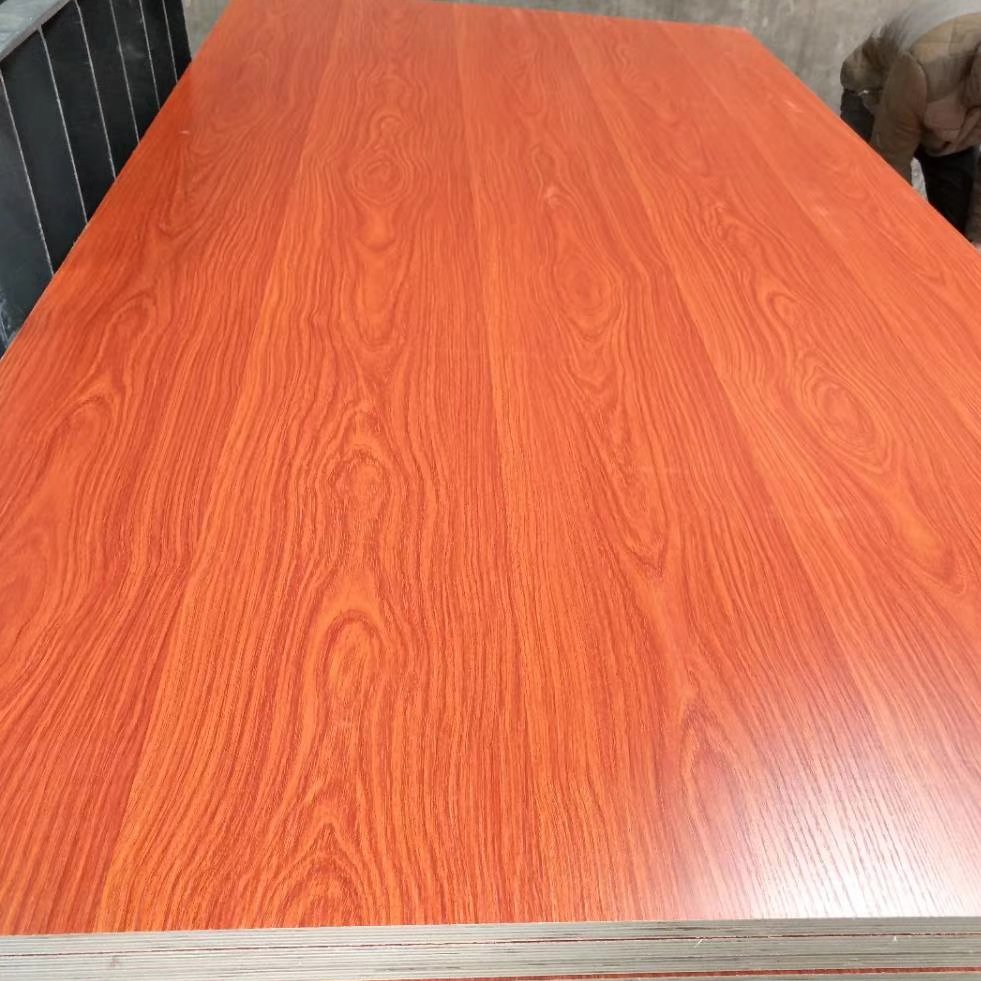
Some panels receive a factory overlay during finishing. A melamine or film face changes the surface completely, adding finish and durability that raw veneer does not carry.
The manufacturing sequence explains the three numbers on every specification: ply count, thickness, and face grade. Buyers who read the process can ask the mill the questions that separate consistent panels from cheap ones.
Request the ply count, face species, and bond class on the datasheet, then compare the delivered stamp with the quoted value. The same process produces very different panels depending on how the line tunes the moisture, glue, and pressing stages.
Furthermore, a mill that documents the drying target and the press settings for every batch tends to deliver predictable thickness sheet after sheet. Ask for the control records alongside the price, because the process discipline shows up in the panel.
Ask the mill for thickness records on past batches. Long-range suppliers with stable readings explain why large projects run without surprises, while one-off samples only describe a single moment.
Answers to the process questions buyers raise when they compare suppliers.
Cross-banded layers balance moisture movement in every direction, so the panel resists the cup and twist that solid boards suffer as humidity changes.
A higher ply count usually improves stability, but species and thickness still set the final behavior. Compare construction and face together, not the ply count alone.
Core species and adhesive content set the weight. Hardwood cores ride heavy, softwood cores stay light, and the difference shifts handling and freight equally.
Process reading works best as a comparison tool between suppliers. Use it to ask sharper questions and to weigh quotes, not to guarantee a panel. The definitive proof still comes from the batch test report on the delivered lot.
Delamination usually traces to the pressing cycle, the glue spread, or moisture at the core. Check the batch records and the bond class on the certificate before accepting the sheet.
Standard sizes avoid changeover and trim waste, so they carry lower per-sheet cost. Custom cuts fit an exact detail but pay for the extra setup.
Read the manufacturing process as a quality map: check the drying discipline, the press settings, and the stamp that ties the sheet to its batch. Request the datasheet with ply count, face species, and bond class, then verify the delivered panel against it at the dock. For dependable structural panels, Commercial Plywood covers the general range, while Melamine Plywood adds a factory-finished face for interior furniture, and Film Faced Plywood handles concrete formwork with a sealed overlay. Confirm the batch documentation and construction details with HYY before you reserve the order, then inspect the stamps at delivery.