Our Location
5th Floor, Huake Center, Lanshan District, Linyi City, Shandong Province, China

5th Floor, Huake Center, Lanshan District, Linyi City, Shandong Province, China
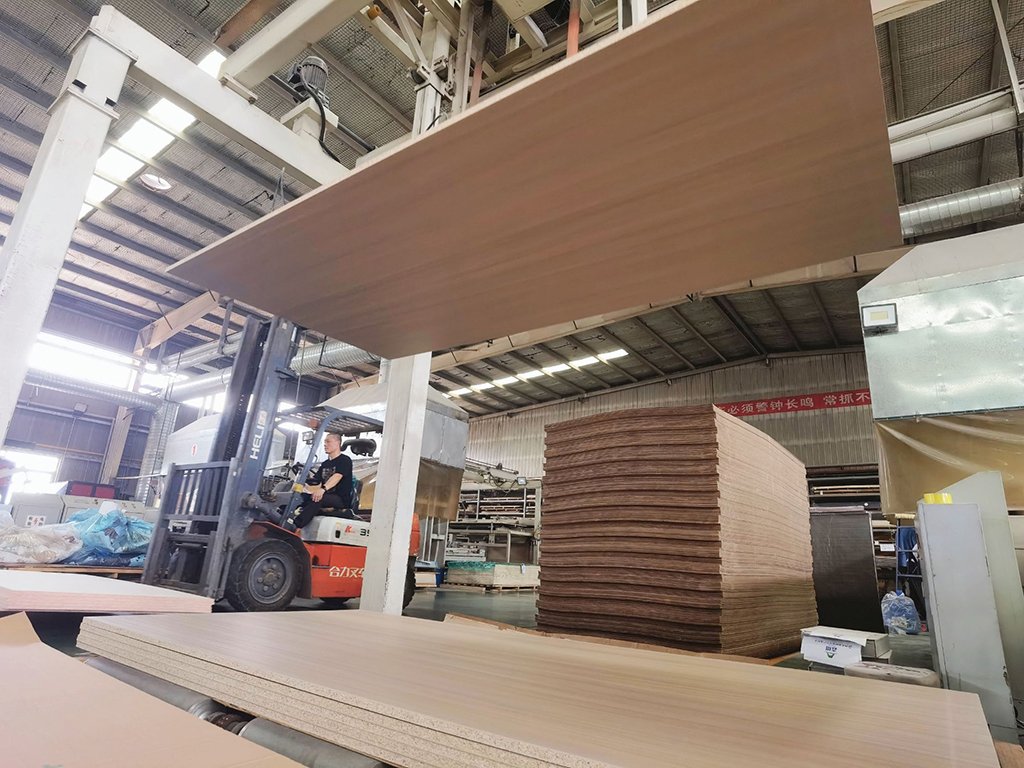
Buyers who type e plus plywood usually mean the E-grade family of low-emission panels, where the E stands for the formaldehyde class of the board. The labels E0, E1, and E2 describe how much formaldehyde the panel releases, and the difference matters indoors where panels sit close to people.
This guide walks through what each letter means, how the classes compare across markets, and what to write on the order so the delivered sheet matches the emission promise.
E grades classify plywood by its formaldehyde release during indoor service. E1 and E2 come from European and Chinese standards history, while E0 grew out of the push for even lower emissions in interior joinery and furniture. The lower the number, the lower the release.
Manufacturers control emission through adhesive chemistry and panel construction. Urea-formaldehyde glues release more, while alternative binders and low-formaldehyde systems bring the sheet down to the tighter classes.
E1 has a long history as the default interior class in Europe, and China adopted the same ladder with its own detection methods. E0 is not an official universal grade everywhere, so the term carries different meanings across markets. Confirm the standard name on the certificate instead of relying on the letter alone.
Comparing reported limits across markets gets confusing because each standard measures emission differently. Some use chamber tests that measure air concentration, others use extraction tests on the board itself.
| Label | Relative emission | Typical use |
|---|---|---|
| E0 | Lowest in the family | Indoor furniture, tight spaces |
| E1 | Low | General interior panels |
| E2 | Higher | Industrial, seldom indoor finish |
| F4 star | Very low Japanese class | Indoor residential use |
Treat the table as a directional guide. The real decision needs the certificate that states both the method and the result, so a supplier quoting a class can prove it with paperwork.
A certificate lists the standard name, the test method, the sample age, and the measured value. Compare the value against the limit for that exact method, because a number that passes one chamber test may fail another. Keep the edition date in view as standards move over time.
A laminated or painted face lowers emissions from the visible surface. A coated sheet can meet a tight class partly because the overlay seals the board, so compare like for like when one quote shows a raw face and another shows a finished face.
Indoor panels release formaldehyde slowly into the air, and concentration rises in tight rooms with limited ventilation. Kitchens, bedrooms, offices, and prefab homes all benefit from specifying a tested low-emission grade at the source.
Contractors who order panels for occupied spaces should lock the class into the specification. Relying on the mill’s word at the door invites friction later when the client asks for the certificate.
Rooms with children, the elderly, or anyone sensitive to irritants benefit most from a certified low-emission panel. The class matters more in sealed, air-conditioned rooms where exchange rates stay low for months at a time.
Regional codes sometimes set local limits that differ from the mill report. Check the local content before you import, because a class that passes in one market may not match the ceiling in another.
Even a low-emission sheet must sit in a ventilated space during installation. Fresh-air flushing after sheathing and before occupancy keeps indoor levels down while the panel settles.
The same indoor room can meet different official classes depending on where the building code was written. Importers deal with this by translating the requirement, not the label: the local limit decides the report the panel needs to pass.
China, Europe, Japan, and North America each publish their own formaldehyde rules, and a sheet that satisfies one jurisdiction may miss another. Confirm the destination market and the applicable edition before you sign a specification.
Chamber methods report an air concentration; extraction methods report a value from the board itself. The two cannot be mapped one-to-one, so a certificate that lists the method makes the comparison honest.
The certificate decides the argument. Ask the supplier for a test report that names the standard, the method, and the measured value, then confirm the batch you receive matches that report.
Those five steps put the emission claim on paper. A supplier that cannot produce a matching report may be quoting a label rather than a tested result.
Emission standards get updated, and a report from an old edition may not satisfy a current code. Confirm the report edition aligns with the requirement in force at your project site.
Emission behavior in the container differs from the lab. Heat and humidity in transit can change the measured release, so ventilate the space where the panels land and let them settle before interior installation. Store sheets flat, keep the bundle dry, and seal exposed edges if the panels wait in a humid warehouse. These habits preserve the class your certificate promises.
Crank the ventilation a few days before panel installation and keep windows or mechanical exhaust running daily. Fresh-air flushing during and just after assembly keeps indoor levels down regardless of the certified value.
Match the panel class to the exposure. Open commercial spaces tolerate a standard interior grade, while sealed bedrooms and prefabricated modules deserve the tighter class. The finishing step also changes the choice.
Industrial buyers compare low-emission grades the same way they compare thickness: on paper, matched to the application. The room type sets the target, the certificate proves the value, and the batch stamp ties both to the delivered sheet.
Where surface durability and clean machining decide more than emission, interior panels with a dense core earn their place in the specification, and printers and cabinet shops verify the face before production.
For furniture and cabinetry where the sheet stays exposed, a smooth, tested low-emission face shortens the finishing path. Melamine Plywood supplies a pre-finished surface suited to indoor joinery.
Where the project demands an engineered structural panel with the emission class confirmed on the order line, Commercial Plywood lets buyers balance stiffness and indoor suitability. For machined interior parts with a fine painted edge, MDF Board covers the flatwork side of the specification.
Each answer below treats the grade as a procurement decision grounded in a certificate. The certificate is the only lasting proof, so hold the sheet to the paper.
No. E0 is not a single universal standard, and different markets define it through different test methods. Always match the certificate to the requirement at your site.
Yes, a surface layer can lower the measurable release. Compare panels with the same finishing to avoid overstating the benefit.
Specify the tightest class your market recognizes for occupied rooms. E1 covers most interior work; sealed spaces benefit from an even lower certificate.
Standards use either a chamber test that measures air concentration or an extraction test on the board. The same physical panel can show different figures under different methods.
Fresh panels release more in the first weeks, and sealed sheets stay stable longer. Ventilate the space and the stored sheets, and confirm the certificate reflects the delivered production, not an old sample.
Only with a matching test report. Treat the letter as a claim until the certificate names the method, the value, and the batch.
Start from the room the panel serves, set the emission class to match the occupancy, then demand the certificate in the quote. Confirm the standard edition, the test method, and the batch on the packing list. A low-emission badge is only as good as the paperwork behind it, so keep the report with the order file. Review the panel class options and delivery certificates with HYY before you lock the specification, A written trail of certificate, batch, and delivery report keeps the emission promise auditable long after the installation is done; verifying at the door saves the claim before the panels leave the pallet. Then sign off the batch against the certificate at acceptance.