Our Location
5th Floor, Huake Center, Lanshan District, Linyi City, Shandong Province, China

5th Floor, Huake Center, Lanshan District, Linyi City, Shandong Province, China
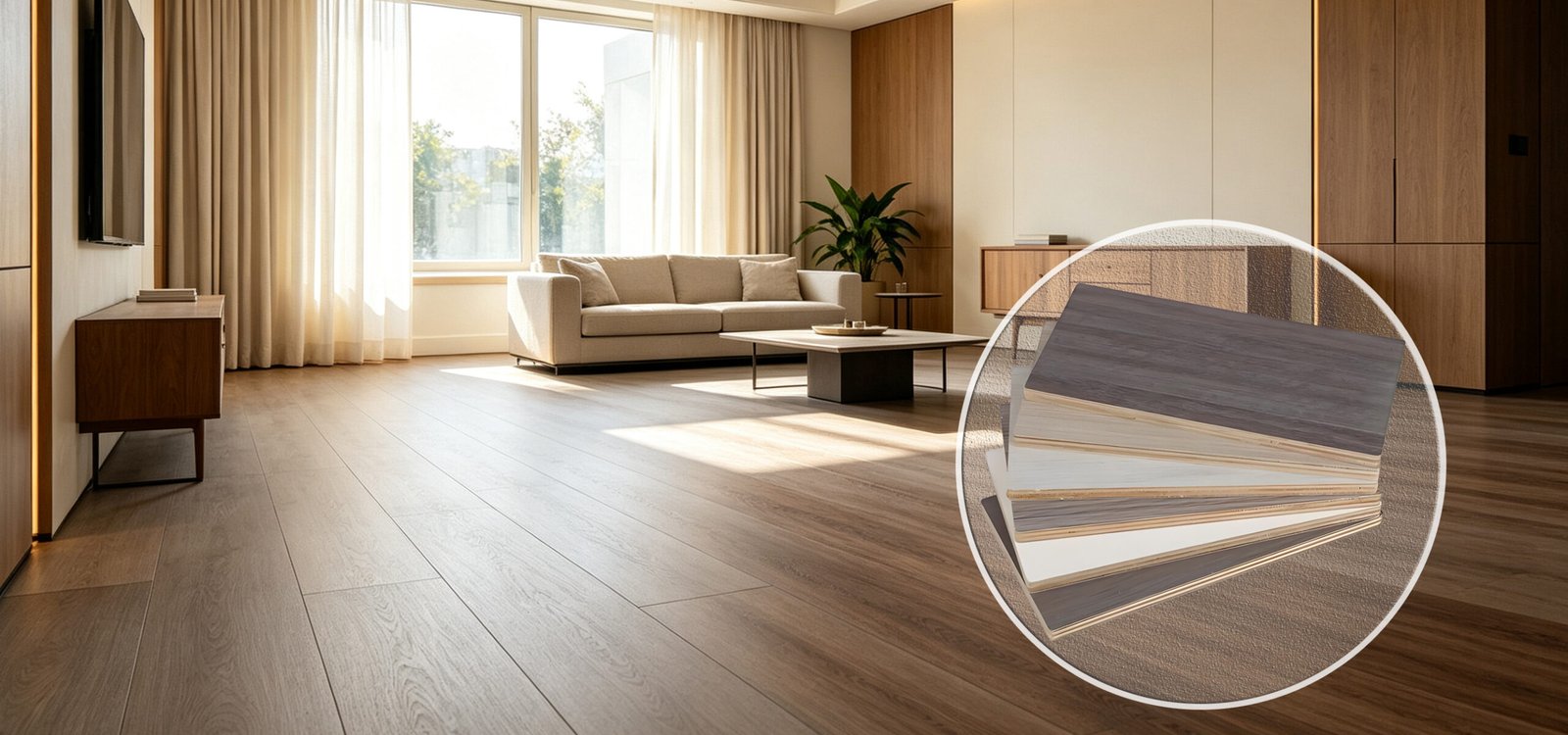
A u lay plywood search usually points at a panel or a layout used under a surface, and the buyer wants to know which sheet serves as the layer beneath a finish. A lay panel carries the surface above it and hides beneath the build, so its job is stability and support rather than appearance. Reading the lay line first keeps the buyer from paying for a show face the build will never see.
This guide explains what a lay panel does, the layers in a stacked build, how to choose the lay sheet, and where the lay line stops.
A lay panel supports the surface above it and stays hidden, so it answers a stability question rather than a face question.
A heavy foot or a machine foot presses a point load into the finish, so the lay sheet spreads that load across the frame beneath. Match the lay sheet to the heaviest point the deck carries.
The lay panel spreads the load of the finish above it across the frame, so its job is to keep the surface flat and quiet under foot or hand. Match the lay sheet to the load the surface carries.
A hidden face still needs to sit flat, because a split or a blown core telegraphs a dip through the finish above it. Check the face at the dock even though it hides.
The lay face disappears under the finish, so the buyer can save the cost of a clear veneer and spend it on stability instead. Read the build before the face.
A thicker lay sheet bridges a wider frame before it flexes, so the thickness follows the spacing the frame shows. Read the spacing before the caliper.
A stable core keeps the lay panel flat through the seasons, so the surface above it stays level without a wave. Match the core to the flatness the finish demands.
A stacked build adds layers from the frame to the finish, and each layer answers a different line.
| Layer | What it does | What to check |
|---|---|---|
| Frame | Carries the load | Spacing and size |
| Lay panel | Spreads and flattens | Thickness and core |
| Finish | Shows the surface | Face and wear |
A course of blocking under the lay sheet stiffens a wide span without a thicker panel, so the crew can hold a flat deck with the frame rather than the sheet. Plan the blocking with the layout.
The frame spacing decides how much the lay panel must span, so a wider spacing asks for a thicker lay sheet. Match the lay panel to the frame before the finish.
The lay sheet bridges the frame and levels the surface, so its thickness and core decide how flat the deck sits. Confirm the caliper before the finish goes down.
An underlay between the lay sheet and the finish adds a cushion and hides a small wave, so the build can soften a thin finish with a layer instead of a thicker sheet. Match the underlay to the finish.
The finish shows what the layer beneath holds, so a wavy lay panel telegraphs through a thin finish. Read the finish with the lay sheet.
The lay sheet follows the load, the finish, and the exposure, so the buyer should fix those three lines first.
A heavy finish or a foot traffic load asks for a thicker lay sheet, while a light finish allows a thinner one, so the load decides the caliper. Read the load before the price.
A resilient finish over a lay sheet earns an underlay that quiets the deck, so the buyer counts the layer with the panel. Plan the underlay with the lay sheet.
A thin resilient finish shows every wave beneath it, so the lay panel must sit flatter than one under a thick finish. Match the lay sheet to the finish thickness.
A vapor line under the lay sheet slows the moisture the slab releases, so the buyer counts the barrier with the panel rather than trusting the sheet alone. Plan the barrier with the lay course.
A lay panel over a wet slab or in a damp room earns an exterior bond, so the exposure line closes the choice. Confirm the bond before the order.
The install decides whether the lay sheet does its job, so a few steps carry the result.
A lay sheet that picks up moisture on site swells and crowns after the finish closes it in, so the panel should sit in the room before the finish goes down. Give the sheet time to reach the room.
A fastener that lands in the field between the joists holds nothing, so the lay sheet should fasten along the frame lines. Mark the frame before the gun starts.
A lay sheet that butts tight against a wall can crown when it takes moisture, so the crew leaves a small gap at the perimeter for the movement. Plan the gap before the finish.
A joint that stacks with the joint above it opens a line through the build, so the lay joints should stagger across the frame. Plan the layout before the first sheet goes down.
The lay panel has a boundary, and the buyer who knows it avoids leaning on the sheet for a job it cannot do.
The lay panel spreads a load while the frame carries it, so a weak frame still fails under a strong lay sheet. Check the frame before the lay panel.
A lay panel over a wet slab can still fail unless a moisture barrier sits below it, so the barrier carries the job the panel cannot. Plan the barrier with the lay sheet.
A lay panel supports the finish while the frame carries the load, so a weak frame still flexes under a strong lay sheet. Check the frame before the lay panel.
The lay panel hides under the finish, so a show face belongs to the layer above rather than the lay sheet. Match the face to the finish, not the lay panel.
Fasten the lay sheet along the frame lines and glue the joints, because a fastener that lands in the field holds nothing and opens a squeak. Mark the frame before the gun starts.
Buyers ask the same questions at the layout stage.
A lay panel supports and levels the surface above it while staying hidden, so its job is stability rather than appearance. Match it to the load.
No. The face hides under the finish, so the buyer can save the cost of a clear veneer and spend it on a stable core instead.
Thick enough to span the frame at the finish load without flexing, so read the spacing and the load before the caliper. A wider frame asks for more thickness.
Yes. A sheet that picks up moisture on site can crown after the finish closes it in, so let it reach the room before the finish goes down.
Only with a moisture barrier below it, because the panel cannot stop the moisture the slab releases. Plan the barrier with the lay sheet.
A u lay panel earns its place by keeping the surface above it flat and quiet, so match it to the load, the finish, and the exposure, then acclimate and fasten it on the frame. For panels that carry a lay course, Commercial Plywood covers the sanded families, Film Faced Plywood seals surfaces for wet service, and Chip Board serves hidden infill. Confirm the caliper, the core, and the certificate with HYY before the order ships, then check the bundle at the dock.