Our Location
5th Floor, Huake Center, Lanshan District, Linyi City, Shandong Province, China

5th Floor, Huake Center, Lanshan District, Linyi City, Shandong Province, China
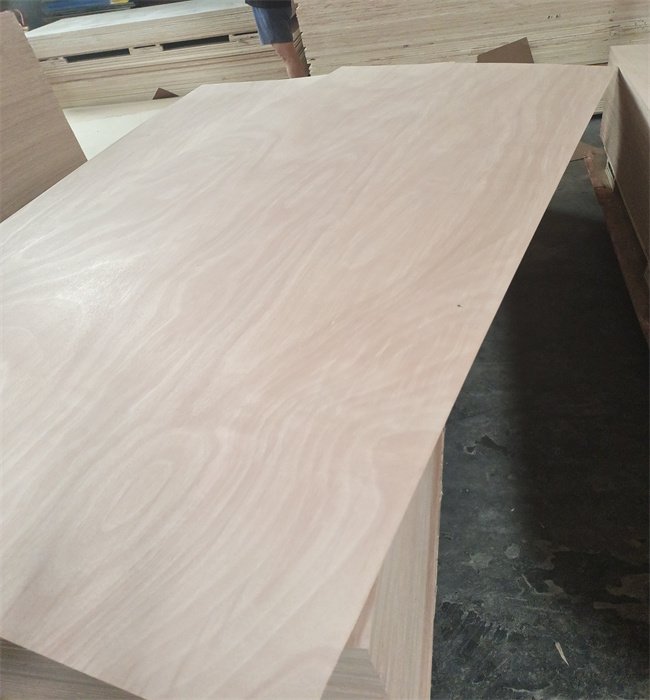
A request for 1.5 m plywood usually points to one of two panels: a thin 1.5 mm flexible sheet or a short-stock board around 1.5 meters long. Both appear constantly in packing, signage, light furniture, and small-batch fabrication, yet buyers rarely specify them precisely. This guide sorts out which one you need and what to put on the order line.
The ambiguity in this keyword comes from real market language. Factories and traders use 1.5 mm sheet for flexible laminates, while workshops ask for 1.5 m cut-to-length boards for cabinet work. The right product depends on the cut sheet size in your drawing, not the search phrase alone.
Stock sizes vary by market too. Some regions sell nothing below full sheets, while others routinely trim to 1.5 m for cost savings on freight. Ask about available cuts before you design around a size that no local mill stocks.
Flexible plywood at 1.5 mm bends around curves, backs signs, and lines drawers. It comes in full 1220 x 2440 mm sheets that split into small parts with a blade or scissors. This grade answers decorative and light duty jobs where stiffness is not the requirement.
Some suppliers sell boards cut to lengths like 1.5 meters for workshops that pack standard cabinets or ship by smaller packaging. Short stock avoids oversized freight and cuts waste when the part never exceeds that length in either dimension.
| Panel meaning | Typical thickness | Main use |
|---|---|---|
| Thin flexible sheet | 1.5 mm | Signage, packing, drawer lining |
| Short-stock board | 9 to 18 mm | Small cabinets, prototypes, pallet infill |
| Full sheet | 3 to 24 mm | Large panels and construction |
The table condenses the choice. Confirm the thickness on the same line as the size, because the two readings of 1.5 m plywood lead to completely different products.
Thin plywood performs where weight and flexibility count. Sign companies laminate it onto posts, packing teams layer it into boxes, and furniture makers use it for drawer bottoms and dust panels. It takes razor cuts cleanly and bends without cracking across gentle radii.
Drawer liners, instrument panels, and removable covers favor the thin sheet because it stays light and fits tight spaces. Designers match the veneer face to the surrounding finish so the panel disappears into the piece.
A 1.5 mm sheet bends but not around sharp corners. Tight radii crack the outer veneer, so keep curves gentle or switch to a thicker flexible panel for the bend.
Storage habits protect thin panels more than any grade does. Keep 1.5 mm sheets flat and off damp floors, and stack heavy panels on top of light to prevent long-term bow. Moisture moves in from the edges first, so edge sealing extends every panel.
Test the radius on a scrap before cutting production parts.
Short stock serves workshops that want exact lengths without freight penalties. A 1.5 m board suits cabinet rails, small shelves, and infill panels.
Pallet infill and dunnage consume short stock by the board on export loads. Workshops cut 1.5 m lengths to brace crates and separate cartons, which turns a sheet order into a freight supply item. Confirm the moisture grade so packing panels do not mold in high humidity.
The essential step is a cutting plan that fits parts onto the sheet with minimal kerf waste.
Consequently, buyers who order short stock should still think in sheets. Two 1220 x 1500 mm boards may hold the same parts as one full sheet, but the price per area differs. Compare per square meter between stock sizes before locking the order.
Arrange parts in a rectangle grid, pair sizes that share a kerf line, and leave grain direction on the plan. Small adjustments cut waste by five percent or more and make the delivery math visible.
For flat interior panels that machine tight edges, MDF Board often suits cabinet parts better than thin plywood. It cuts clean, paints flat, and holds screws in edges once fixed with glue.
Packing departments buy thin sheet by the thousand to line crates and separate goods. Sign makers use it as a stable substrate for vinyl application, where a flat face matters more than structural strength.
Surface quality decides the finished look in short runs. A sanded face takes stain and lacquer evenly, while an unsanded utility face shows grain under transparent finish. Request the sanded grade when the piece stays visible after assembly.
Working through that list keeps a thin-panel order honest. Without it, sources quote different products under the same size.
This decision table closes most of the ambiguity in one glance.
| Application | Thickness | Panel choice |
|---|---|---|
| Drawer lining | 1.5 mm | Thin flexible sheet |
| Sign backing | 1.5 mm | Sanded thin sheet |
| Cabinet rails | 12 to 18 mm | Short-stock board |
| Concrete forms | 12 to 18 mm | Film faced panel |
| Structural framing | 18 mm and up | Commercial plywood |
Match the product to the application instead of the search phrase. Thin flexible sheet serves decorative and light mechanical jobs. Short-stock boards handle rigid structural parts. Full panels cover large framing, where stiffness and span dominate the decision.
For structural framing, screening, and general building, Commercial Plywood delivers consistent strength in full and cut-to-size sheets. If you need a finished face for cabinetry, Melamine Plywood saves a finishing step on the factory floor.
Short sheets also appear on concrete sites where 1.5 m boards handle small wall sections and column forms. Wet stripping demands a bond that survives contact with concrete and repeated reuse, which pushes specifiers toward film faces.
Thin plywood has no place in formwork. A 1.5 mm sheet cannot carry wet concrete pressure, and the panel wrinkle ends the job early.
Where forms stay small and strips often, Film Faced Plywood in short lengths beats full sheets for handling and speed. The film seals moisture and strips clean, which pays back the higher unit price in reuse cycles.
The first error is never stating the thickness. A quote written without a millimeter figure arrives as whichever product the supplier stockpiles. The second mistake is comparing prices between short stock and full sheets on different units.
The third error shows up at the container. Thin sheets packed loosely warp and edge-damage, so specify flat packing and edge protection in the order document.
Split the line into size, thickness, face, and bond. When each appears explicitly, the delivered panel matches the drawing and the buyer stops guessing.
Answers to the questions this keyword raises most often.
Yes, across gentle radii. Sharp bends crack the outer veneer, so test the curve on a scrap before production.
No. Thin sheets handle lining, backing, and signage, not load-bearing structure. Use a thick structural panel for anything carrying weight.
Not necessarily. Cutting loses yield, so compare the price per square meter between short stock and full sheets before deciding.
A smooth sanded face takes paint and vinyl without grain telegraphing through the finish. Request the sanded grade on the order.
Keep it flat, dry, and off the floor, and seal the edges. Bow becomes permanent when moisture loads the sheet unevenly.
Most plants produce full 1220 x 2440 mm sheets and cut to order. Ask for the cutting list before assuming a 1.5 m board resolves the freight issue.
Only with an exterior or waterproof bond and sealed edges. Thin interior sheets absorb moisture and swell quickly in weather.
Write the thickness on the drawing, choose the right stock length, and compare prices on matching units. For thin decorative work start with HYY; for rigid structure and finished faces the panel family above covers the rest of the specification.