Our Location
5th Floor, Huake Center, Lanshan District, Linyi City, Shandong Province, China

5th Floor, Huake Center, Lanshan District, Linyi City, Shandong Province, China
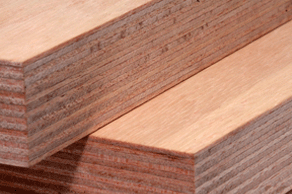
A search for plywood i 95 usually comes from a buyer who either watched a load shed sheets on the interstate or manages a supply line that rides the same corridor every week. The I-95 corridor connects Southeast mills to Northeast markets, and the distance puts transit moisture, packaging, and securement on the critical path between the mill and the jobsite.
This guide covers why the corridor moves so much plywood, what changes during a long transit, which packaging survives the trip, how to run receiving checks on a corridor shipment, and how to specify panels that arrive ready for the install.
Plywood production clusters in the Southeast, while demand concentrates in the Northeast corridor, and the highway carries finished panels between the two every day.
A mill that ships by truck leaves a window of transit that stretches from a same-day drop to a multi-day run depending on the destination along the corridor. The schedule shapes the moisture content at delivery, because a panel that spends a night in a cold trailer picks up condensation that a same-day drop never sees. Buyers who know the transit window ask for the shipping date on the packing list, then plan the receiving crew around the arrival rather than the invoice.
Truckloads that cross state lines face handling at every stop: the forklift at the mill, the scale house, the transfer yard, and the jobsite. Packaging that survives one loader fails at the third, so corridor shipments earn strapping, corner protection, and a wrap that keeps the bundle square through the whole route. The packaging line on the order is a freight specification, not a courtesy.
The daily volume on the corridor keeps freight rates competitive, which rewards buyers who consolidate orders rather than shipping partial loads. A buyer who orders one bundle a week pays the full truck premium each time, while the same quantity on a monthly schedule rides at a lower per-sheet rate. Run both numbers against the storage cost before the next order goes in.
Time on the road affects the panel more than the calendar suggests, and three effects show up on a corridor shipment more often than on a short local haul.
| Transit effect | What it does | Receiving check |
|---|---|---|
| Condensation | Moisture at the wrap | Feel the sheet face at the bundle edge |
| Edge crush | Delamination risk | Sight along each exposed rim |
| Face scuff | Finish prep time | Inspect the top sheet under the wrap |
A cold night followed by a warm morning sweats moisture under the plastic, and the sheets nearest the wrap absorb it first. Open the bundle in a dry area rather than on a wet dock, then feel the top sheet before the crew starts unloading. A damp face earns a hold at the counter rather than a warranty claim three weeks later.
A bundle that sheds a sheet on the road arrives short, and the shortage only surfaces when the cut list runs out of material. Count the sheets against the packing list before the driver leaves, then note the shortfall on the delivery note. The count at the dock settles the claim, while the count after the unload invites an argument about when the loss happened.
The corners of a bundle strike the trailer wall at every hard stop, and a crushed edge opens the plies to the moisture that follows. Sight along each exposed rim before the sheets leave the staging area, then set the damaged sheets aside for the claim rather than burying them in the middle of the stack.
Corridor freight rewards packaging that keeps the bundle square through every handoff, and four elements cover most of the damage a long haul can cause.
A bundle that loses a strap on the road sheds its top sheets at the first rough stop, and the loose sheets scar each other in the trailer. State the strapping pattern on the order, then count the straps at the dock before the driver leaves. The count matches the packing list, or the delivery earns a hold.
A sealed plastic wrap keeps the rain off but locks in the moisture a cold night leaves behind, while a breathable wrap vents the sweat and still sheds a downpour. For a multi-day corridor run, the breathable option costs a little more at the mill and saves the claim at the dock. Confirm the wrap type on the order line rather than assuming the standard.
The receiving crew owns one pass to catch what the driver will not, and the checklist below covers the damage a corridor haul actually causes.
Walk the bundle while it still sits on the trailer, then note the strap count, the wrap condition, and any crushed corner on the delivery note before the forklift touches the load. The note written at the dock settles the claim later, while the note written after the unload invites an argument about when the damage happened.
Panels that lean against a wall for a week pick up a bow that the saw follows, and a wet dock accelerates the problem. Set the sheets flat on stickers in a dry area, then cut the parts that carry visible faces first while the panel is still true. The storage habit costs a floor space and saves the rework a bowed sheet forces.
The order line decides how the panel behaves on the road, and three notes keep the delivered sheet ready for the install.
A panel that spends a night in a cold trailer meets moisture that a same-day drop never sees, and an interior bond delaminates faster than a weather-rated one. Specify the bond against the worst condition the transit and the jobsite will deliver, then seal every exposed edge before the install.
A corridor shipment that arrives in the afternoon needs a covered staging area ready before the truck backs in, because the wrap comes off in the weather that evening. Schedule the crew, the forklift, and the dry storage against the arrival window on the bill of lading, then run the receiving check while the bundle still sits on the trailer.
The shipping date on the packing list tells the receiving crew how long the bundle spent in transit, which sets the moisture check before the unload. A shipment that left the mill two days ago needs a different receiving plan than one that spent a week on the road, and the date costs nothing to write on the order.
Answers buyers raise before the truck rolls.
Feel the top sheet at the wrap edge before the unload, then check the underside of the wrap for condensation. A damp face earns a hold at the counter rather than a warranty claim later.
Steel or polymer strapping that holds the bundle count through every handoff, with a pattern stated on the order. Count the straps at the dock before the driver leaves.
Note the damage on the delivery note, then sort the affected sheets for the claim rather than burying them in the stack. One crushed corner can hide a delaminated edge that fails after the install.
It costs a little more at the mill and saves the claim at the dock, because it vents the sweat a sealed plastic wrap traps. Confirm the wrap type on the order line.
When the transit window includes a cold night or the jobsite sits outdoors, because the panel meets moisture that a same-day indoor drop never sees. Seal every exposed edge regardless of the bond.
The corridor rewards buyers who specify the packaging, the bond, and the shipping date before the truck rolls, then run the receiving check while the bundle still sits on the trailer. For panels that arrive ready for the install, Commercial Plywood covers the general range, Film Faced Plywood seals surfaces for wet service, and Chip Board serves hidden positions at a lower cost. Confirm the face, the bond, and the certificate with HYY before the order goes out, then check the delivered sheets at the dock.