Our Location
5th Floor, Huake Center, Lanshan District, Linyi City, Shandong Province, China

5th Floor, Huake Center, Lanshan District, Linyi City, Shandong Province, China
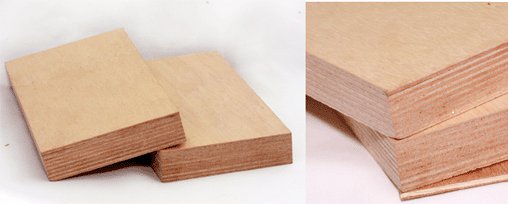
A buyer who searches plywood howdens usually holds a trade account in one hand and a joinery list in the other, and the question behind the search is what a Howdens-style trade counter actually delivers on a plywood order. Trade depots stock panels that serve kitchens, wardrobes, and site joinery, and the range rewards buyers who arrive with a written spec rather than a memory of a similar sheet.
This guide covers what a trade counter like Howdens stocks, how to read the spec before the order goes in, how face and core choices suit joinery work, when the trade range falls short of a project demand, and how to check the delivery against the paperwork.
Trade depots turn inventory fast and keep a short list of sizes and faces that cover the majority of joinery work, and the range stays narrow enough to serve the counter without long waits.
Full sheets in standard footprints cover most orders, while cut-to-size services handle the panels that fit a van or a wardrobe carcass. The depot prices the cut against the full sheet, so a buyer who needs three narrow strips often pays for more material than the drawing consumes. Plan the cut list around full sheets when the project allows, then use the cutting service for the odd pieces that would otherwise waste a second panel.
Sanded faces carry painted joinery, while melamine and veneered faces serve cabinet interiors and visible runs. Sheathing-grade panels appear in smaller quantities because the trade counter focuses on fit-out work rather than structural framing. Confirm the face letter on the order line rather than relying on the rack label, because a face that looks similar can sit a tier apart in price and prep time.
Same-day collection and account pricing turn a materials purchase into a workflow decision, because the joiner who leaves the depot with cut panels saves a saw setup on site. The saving only holds when the cut list is accurate, because a re-cut at the depot costs a second trip and a second charge. Bring the list measured from the drawing, not from a memory of the last job.
A trade counter sells to a trade customer, which means the specification carries more weight than the shelf label. Four details settle most orders before the sheets reach the van.
| Spec item | Why it matters | What to write on the order |
|---|---|---|
| Thickness | Hardware and span assumptions | Nominal size in mm |
| Face grade | Prep and finish time | Letter pair from the standard |
| Core type | Screw and pin holding | Solid or patchwork, named |
| Bond class | Moisture exposure | Interior or weather rating |
A panel that reads three-quarter inch in one market reads eighteen millimeters in another, and the router bases, hinge cups, and drawer runners all assume one number. Write the thickness in the unit the hardware expects, then measure a delivered sheet with a caliper before the parts get cut. The two minutes at the dock prevent the hinge that binds because the door came out a millimeter proud.
The letter pair on the stamp names the show face and the back, and the pair should match the drawing before the order ships. A counter that sells by description alone can substitute a lower back face without changing the price, and the substitution shows up when the panel gets flipped during assembly. Ask for the pair on the quote, then read it back at the depot.
Joinery panels live indoors, meet a finish, and carry hardware, so the three choices above interact more than they do on a construction site.
A kitchen spans multiple sheets, and tone drifts between harvests even when the letter pair stays the same. Order the full run from one batch when the faces show, then store the sheets flat together so the color stays matched across the doors and end panels. The certificate names the run, and the depot can usually confirm the lot on the delivery note.
Panels that travel between a heated van and a damp site absorb moisture at the cut edge, and an interior bond delaminates faster than a weather-rated one. Specify the bond against the worst condition the panel will see during the job, then seal every exposed edge before the install. The edge treatment costs an hour and prevents the door that swells after the first wet week.
A trade counter covers the majority of joinery demand, yet specialty panels and odd dimensions usually require a different supplier.
Marine panels and fire-retardant treatments carry certificates that a general trade counter rarely stocks, and the inspector will ask for the document by name. When the drawing calls for a rated panel, confirm the certificate before the order goes in, then source from a mill that can ship the paperwork with the sheets.
A non-standard footprint turns into a special order with a lead time that often matches a direct mill delivery. Run both timelines before committing, because the depot price that wins on a small order loses on a full container when the freight and the waste get counted. For a full room of panels, the direct quote frequently lands lower on a landed basis.
The depot hands over panels that already passed a counter check, yet the receiving crew still owns the acceptance test before the sheets reach the saw.
Read the thickness, the face pair, and the quantity against the written order before the bundles leave the depot yard. A mismatch earns a swap at the counter rather than a re-cut on site, and the note travels with the job file when the customer later questions a delivered panel.
Panels that arrive cold from the van absorb moisture at the cut edge once they sit in a heated room, and the swelling shows up as a joint that will not close. Let the sheets acclimate flat in the install space for a day before the first cut, then seal every exposed edge before the parts leave the bench.
Panels that lean against a wall for a week pick up a bow that the saw will follow. Stack the sheets flat on stickers in a dry area, then cut the parts that carry visible faces first while the panel is still true. The storage habit costs a floor space and saves the rework a bowed sheet forces.
Answers trade buyers raise at the counter.
Ask for the product data sheet by name, because the rack label rarely carries the full core and bond detail. The sheet travels with the job file when the customer or the inspector questions the panel.
On small orders the account price usually wins once the trip and the waste are counted, while full-room quantities often land lower direct. Run both totals on working footage before you commit.
Batch matching requires an explicit request, because tone drifts between runs even when the letter pair stays the same. Order the full quantity from one batch when the faces show.
Measure a sheet with a caliper before the parts get cut, then raise the mismatch at the counter. The swap costs a trip; the re-cut costs the whole order.
Rated panels, marine bonds, and non-standard footprints usually need a mill or a specialist supplier. Confirm the certificate and the lead time before the order goes in.
A trade counter like Howdens earns its place when the buyer arrives with a written spec, reads the face pair and the bond back at the counter, and checks the delivery note before the sheets leave the yard. For panels that need a documented batch or a specialty bond, source direct and verify the certificate at the dock. When the project calls for general joinery panels, Commercial Plywood covers the range, Melamine Plywood arrives factory-finished for cabinet interiors, and MDF Board serves painted trim and infill. Confirm the core, the face, and the certificate with HYY before the order goes out, then check the delivered sheets at the dock.